Source Measuring Wheel for Surveying, Construction, and Landscaping
Compare 30 Measuring Wheel options from verified suppliers. These devices feature manual measurement methods, mechanical counters, and various accuracy levels suitable for road, metric, and professional applications.
Key considerations
Products List


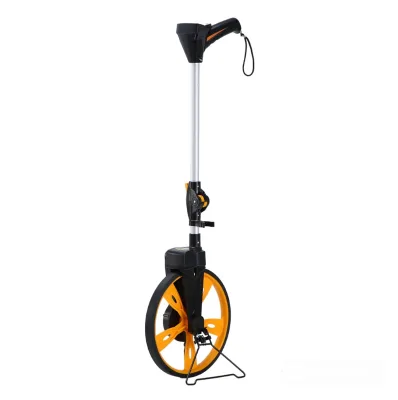
Walking Meter Measuring Wheel Tool Distance Telescopic Measuring Meter Wheel
$25.00 - $29.00
MOQ: 2 Pieces


Digital Distance Measuring Wheel Big Measuring Tool for Accurate Measurements
$35.00 - $45.00
MOQ: 2 Pieces


Comprehensive Sourcing Guide
Strategic Sourcing Guide for Measuring Wheels
Understanding Technical Specifications and Performance Metrics
When sourcing a Measuring Wheel, often referred to as a surveyor's wheel or odometer, buyers must first distinguish between the specific technical attributes required for their intended application. The market presents a variety of configurations, ranging from basic manual devices to professional-grade instruments. A critical observation in the current product landscape is the variation in resolution and accuracy claims. Some units are listed with a resolution of 0.01mm, while others specify a precision of 0.05mm or an accuracy rating of 1mm. It is essential for buyers to treat these figures as product-specific observations rather than universal standards for all measuring wheels. The discrepancy between a "Not Precision Measuring Device" classification and devices boasting high-resolution counters indicates that the intended use case dictates the necessary specification.
The maximum measuring range is another pivotal technical parameter. Data indicates that available models support ranges such as 99,999.9 meters or feet, while other variants are limited to 9,999.9 meters or 0-9,999.9 inches. This variance directly impacts the suitability of the tool for large-scale infrastructure projects versus smaller, localized tasks. Furthermore, the counter type is a defining feature; the supply chain offers both mechanical counters with capacities of 1,000 units and those capable of 10,000 units. The choice between these depends on the frequency of use and the need for data continuity without resetting. Buyers should also verify the physical dimensions, as some specifications list a total length of 105mm or a folded length of 55cm, while others cite a circumference of 100cm or 1.0m. These physical attributes influence portability and the ergonomics of the device during extended field use.
Compliance and Certification Verification
In the global B2B market, regulatory compliance is a non-negotiable baseline for procurement. For measuring wheels, the most frequently observed certifications in the current supply pool are RoHS (Restriction of Hazardous Substances) and CE (Conformité Européenne). These standards are critical for ensuring that the product meets environmental safety requirements and European market entry criteria. When evaluating potential suppliers, buyers must explicitly verify that the specific unit they intend to purchase carries these certifications. The provided data confirms that models such as those with product models 900007, 900014, 900015, and 900016 are associated with RoHS and CE standards. However, it is vital to note that not every listed product may satisfy these requirements; compliance should be treated as a specific attribute of the selected model rather than a blanket guarantee for the entire category.
Beyond the standard certifications, buyers should investigate the origin of the product to understand the regulatory framework under which it was manufactured. The majority of the observed data points to production origins in Zhejiang, China, and general China locations. While this geographic information helps in logistics planning, it does not inherently guarantee compliance. The presence of a CE mark, for instance, implies that the manufacturer has declared conformity with EU safety, health, and environmental requirements, but the buyer must request the specific Declaration of Conformity (DoC) for the batch being ordered. Additionally, some listings mention specific standards like "17 inch" or "66cm" under the "standard" property, which likely refers to physical dimensions or wheel sizes rather than regulatory standards. Buyers must exercise caution to distinguish between physical specifications and regulatory compliance documents to avoid procurement errors.
Cost Drivers and Pricing Dynamics
The pricing structure for measuring wheels is highly variable, reflecting the diversity in specifications, materials, and customization options. The observed price range in the market spans from $0.20 to $220.00 USD. This wide disparity suggests that cost is driven by several factors beyond the basic function of measuring distance. High-end models featuring larger measuring ranges, such as 99,999.9 meters, and higher counter capacities of 10,000 units likely command prices at the upper end of this spectrum. Conversely, basic units with smaller ranges and lower counter limits may be found near the lower price point.
Material composition is another significant cost driver. Products described as having a "Steel Body" or "Steel Frame" generally offer greater durability and resistance to wear and tear compared to plastic alternatives, which may justify a higher price. Customization is a major factor influencing cost as well. The market data indicates that customization is available, with options for color customization and OEM (Original Equipment Manufacturer) acceptance. Buyers requesting specific branding, custom colors, or modified dimensions will incur additional costs compared to purchasing standard off-the-shelf units. Furthermore, packaging requirements, such as the "Canvas Bag + Color Box" or "1PC/Canvas Bag, Then Color Box," can affect the final unit price, especially for bulk orders where packaging consistency is required.
Typical Applications and Use Cases
The versatility of the Measuring Wheel allows it to serve a broad spectrum of applications across various industries. The primary function of these devices is to measure distance manually, making them indispensable for surveyors, construction workers, and utility companies. The "Road Ruuner Measuring Wheel" and "Metric Measuring Wheel" names suggest specific applications in road construction and metric-based surveying, respectively. The ability to measure in both meters and feet, as indicated by ranges like "99,999.9 Meter or Feet," makes these tools suitable for international projects where dual-unit systems are necessary.
For construction and civil engineering, the durability of the steel frame is crucial. The "Steel Frame Measuring Wheel" is likely designed to withstand the rigors of rough terrain, construction sites, and outdoor environments. The mechanical counter type ensures that the device remains functional even in conditions where electronic components might fail due to dust, moisture, or impact. In real estate and landscaping, the portability of folded units, with lengths reducing to 55cm, allows for easy transport to various job sites. The "Professional Measuring Wheel" designation implies a higher tier of reliability for tasks requiring consistent accuracy over long distances, such as mapping property boundaries or planning utility lines. Buyers should match the specific application needs, such as the required range and accuracy, to the product attributes observed in the market.
Supplier Evaluation and Selection Criteria
Selecting the right supplier requires a rigorous evaluation process that goes beyond price comparison. Given that the product count in the observed market is 30, buyers have a selection of options, but the quality of these options varies. A primary criterion for evaluation is the consistency of the product specifications. Buyers should verify that the supplier can consistently provide units with the claimed attributes, such as the specific resolution, accuracy, and counter type. The presence of multiple product models (e.g., 900007, 900011, 900015) suggests that suppliers may offer a range of SKUs; buyers must ensure the specific model ordered matches their technical requirements.
Customization capabilities are another key factor. Suppliers that accept OEM requests and offer color customization provide greater flexibility for buyers looking to brand their equipment or meet specific aesthetic requirements. However, buyers should verify the supplier's capacity to handle these custom orders without compromising on the core quality of the device. The origin of the product, primarily Zhejiang, China, should be considered in the context of logistics and lead times. While the specific lead times are not provided in the data, buyers should inquire about production schedules and shipping timelines to ensure timely delivery. Additionally, the packaging standards, such as the use of canvas bags and color boxes, should be evaluated to ensure the product arrives in good condition and meets the buyer's presentation standards.
Quality Control and Long-Term Procurement Considerations
Quality control is paramount when procuring measuring wheels, as the reliability of the device directly impacts the accuracy of field data. Buyers should implement a quality assurance protocol that includes verifying the mechanical counter's functionality and the structural integrity of the steel frame. The observed accuracy ratings, such as 99.5% or 1mm, should be validated through sample testing before placing large orders. It is important to note that the "Not Precision Measuring Device" classification for some units means they may not be suitable for high-precision surveying tasks; buyers must align their quality expectations with the device's intended classification.
Long-term procurement considerations involve assessing the durability and maintenance requirements of the devices. The mechanical nature of the counters suggests a lower risk of electronic failure, but the moving parts require regular inspection and lubrication. The "Canvas Bag + Color Box" packaging indicates a focus on protection during transit, but buyers should also consider the long-term storage conditions for the devices. For organizations with high-volume needs, establishing a relationship with a supplier that offers consistent quality and reliable customization is essential. The ability to source units with specific certifications like RoHS and CE ensures that the procurement remains compliant with international standards over time. Buyers should also consider the scalability of their orders, noting that the observed MOQ range spans from 1 to 10,000 units, allowing for flexibility in order sizes based on project needs.
Comparative Analysis of Key Product Attributes
To facilitate a clearer understanding of the market offerings, the following table summarizes the key attributes observed across the different product models. This comparison highlights the diversity in specifications and helps buyers identify the most suitable options for their specific requirements.
| Attribute | Model 900007 | Model 900011 | Model 900015 | Model 900016 |
|---|---|---|---|---|
| Name | Road Ruuner Measuring Wheel | Metric Measuring Wheel | Steel Frame Measuring Wheel | Professional Measuring Wheel |
| Max Range | 99,999.9 Meter | 9,999.9m or Feet | 99,999.9 Meter or Feet | 99,999.99 Meter or Feet |
| Counter Type | Mechanical 10,000 Units | 1,000 units | Mechanical 10,000 units | 10,000 units |
| Accuracy/Precision | 99.5% | Not specified | 0.05mm | 1mm |
| Resolution | 0.01mm | Not specified | Not specified | Not specified |
| Material | Not specified | Not specified | Steel Body | Not specified |
| Certifications | CE, RoHS | Not specified | RoHS, CE | RoHS, CE |
| Origin | Zhejiang, China | Not specified | China | China |
| Customization | Available | Not specified | Color/ OEM | Not specified |
This table illustrates that while many models share common features like mechanical counters and similar maximum ranges, there are distinct differences in accuracy, material, and certification. For instance, the Professional Measuring Wheel (900016) offers a slightly higher maximum range of 99,999.99 meters, while the Steel Frame Measuring Wheel (900015) explicitly highlights its steel construction and 0.05mm precision. Buyers must carefully cross-reference these attributes against their project requirements to ensure they select the most appropriate device. The variation in certification status, with some models explicitly listing CE and RoHS while others do not, further underscores the need for due diligence during the sourcing process. By understanding these nuances, buyers can make informed decisions that balance cost, performance, and compliance.
FAQs
What certifications do the measuring wheels have?
The measuring wheels are certified with RoHS and CE standards. These certifications ensure compliance with environmental safety and European market entry criteria for models like 900007 and 900016.
How large is the maximum measuring range?
The maximum measuring range varies by model, reaching up to 99,999.9 meters or feet. Some units offer a range of 9,999.9 meters, suitable for both large infrastructure and smaller localized tasks.
Can I customize the color or brand of the wheel?
Customization is available for color and OEM branding on specific models. Buyers can request custom colors and accept OEM requests, though this may affect the final unit price compared to standard units.
What is the accuracy of the Measuring Wheel?
Accuracy varies by model, with some units rated at 1mm or 99.5%. Other specifications list a precision of 0.05mm or a resolution of 0.01mm depending on the specific device configuration.
Which counter type is used in these devices?
The devices use mechanical counters with capacities of either 1,000 or 10,000 units. The choice depends on the frequency of use and the need for data continuity without resetting during field operations.
Where are the measuring wheels manufactured?
The products originate from Zhejiang, China, and other general China locations. This geographic information assists in logistics planning but does not inherently guarantee compliance without specific verification.
What is the price range for these measuring wheels?
The observed price range spans from 0.2 to 220 USD. Cost drivers include material composition, measuring range, counter capacity, and customization options like color or OEM branding.